Building the Route and the Rotation Schedule
Most Saturday inspection drives start before breakfast, with the board volunteer or manager plotting out a practical route. The goal is to cover as much ground as possible in two hours, not to see every corner every single time. Many communities are laid out in loops or grids, which helps avoid backtracking. A good rotation schedule means each street gets the same attention, some managers use spreadsheets to track which sections were checked last week, last month, or before a holiday.
Main entrances and common areas often come first, since these set the tone for visitors and residents alike. From there, the route usually follows the main arteries, branching off into cul-de-sacs or clusters. Busy streets sometimes get skipped if parking or traffic makes a slow drive impractical, but most inspectors double back on foot later if needed. In large associations, teams split up, each covering a sector and then regrouping at a predetermined spot.
Consistency matters. If a drive covers the north end one week and the south the next, residents come to expect fairness. The rotation schedule prevents claims of favoritism or neglect. The two-hour window is tight, so efficiency is crucial. The best inspectors balance thoroughness with the reality of the clock, knowing that trying to see everything, every time, is impossible.
Keep reading: How to Photograph a Covenant Violation So the File Holds Up
What Gets Logged and What Gets Let Go
Every community has a list of common covenant violations, lawn neglect, unapproved paint colors, vehicle storage, and visible trash cans. Each association's rules are a little different, but the basics rarely change. During the drive, inspectors focus on clear, visible violations that are easy to document from the street. Anything in a gray area is usually skipped or flagged for a second look by the board.
For example, a car parked on a non-paved surface is a definite violation in most rulesets. A faded house number might get a pass in spring, but not after a violation letter has already been sent. Inspectors let minor issues slide when there's a sign of active effort, bags of mulch next to a half-finished flower bed, or a stack of lumber for a new fence. The idea is not to punish improvement, but to keep the neighborhood tidy.
Some things are almost never logged: a basketball hoop moved for play, a child's bike left out for an hour, or a yard in the middle of a landscaping project. Inspectors want to avoid nitpicking and focus on patterns, not one-off slip-ups. A house with peeling paint and overflowing gutters gets noted, while a few dandelions do not.
Staying on the Street and Off Private Property
Community inspectors do not enter backyards, driveways, or walk up garden paths. Inspections are limited to what is visible from the street or common areas. This boundary is a legal and ethical line that cannot be crossed, even if a neighbor calls in a tip about something hidden behind a fence. The majority of state laws reinforce this, and most association bylaws echo the same standard.
The passenger seat job is to keep the process transparent. If a violation cannot be seen from the street, it does not get logged. This protects both the inspector and the association from accusations of trespass or harassment. Binoculars are rarely used and only for verifying far-off house numbers, not peering into windows or side yards.
When the view is blocked by hedges or parked cars, inspectors make a note and check again next time. Some communities have policies that allow for a mailed notice requesting access for specific concerns, but these are rare. Most violations are visible enough that private property need not be entered at all.
Keep reading: Every Line a Covenant Violation Notice Needs Before Mailing
Seasonal Items: Trash Cans, Holiday Decor, Overgrowth
Some violations come in waves, tied to the calendar. After trash pickup day, entire blocks might have bins at the curb for longer than the rules allow. Inspectors note which homes have consistent issues, rather than citing everyone for a late can on a windy morning. A second check later in the day can confirm if a problem is chronic or just a fluke.
Holiday decorations are another seasonal item. Lights and inflatables that linger long after the season draws complaints. Most associations set a grace period, such as two weeks after New Year's for winter decor or a week after Halloween. Inspectors look for items left well past these dates: pumpkins rotting on porches in December, or faded Fourth of July bunting in September.
Overgrowth is a summer problem. Lawns that go uncut for weeks, shrubs spilling onto sidewalks, and weeds in flower beds stand out during the growing season. Inspectors try to distinguish between a vacation-related lapse and chronic neglect. Notes are made when a property looks abandoned, and these often prompt a courtesy call before any violation letter is sent.
Paint colors and exterior modifications also pop up seasonally, especially in spring. Inspectors look for freshly painted exteriors in colors that do not match the approved palette. When in doubt, they check for an application on file before logging a violation.
The Passenger Seat Job: Notes, Photos and Addresses
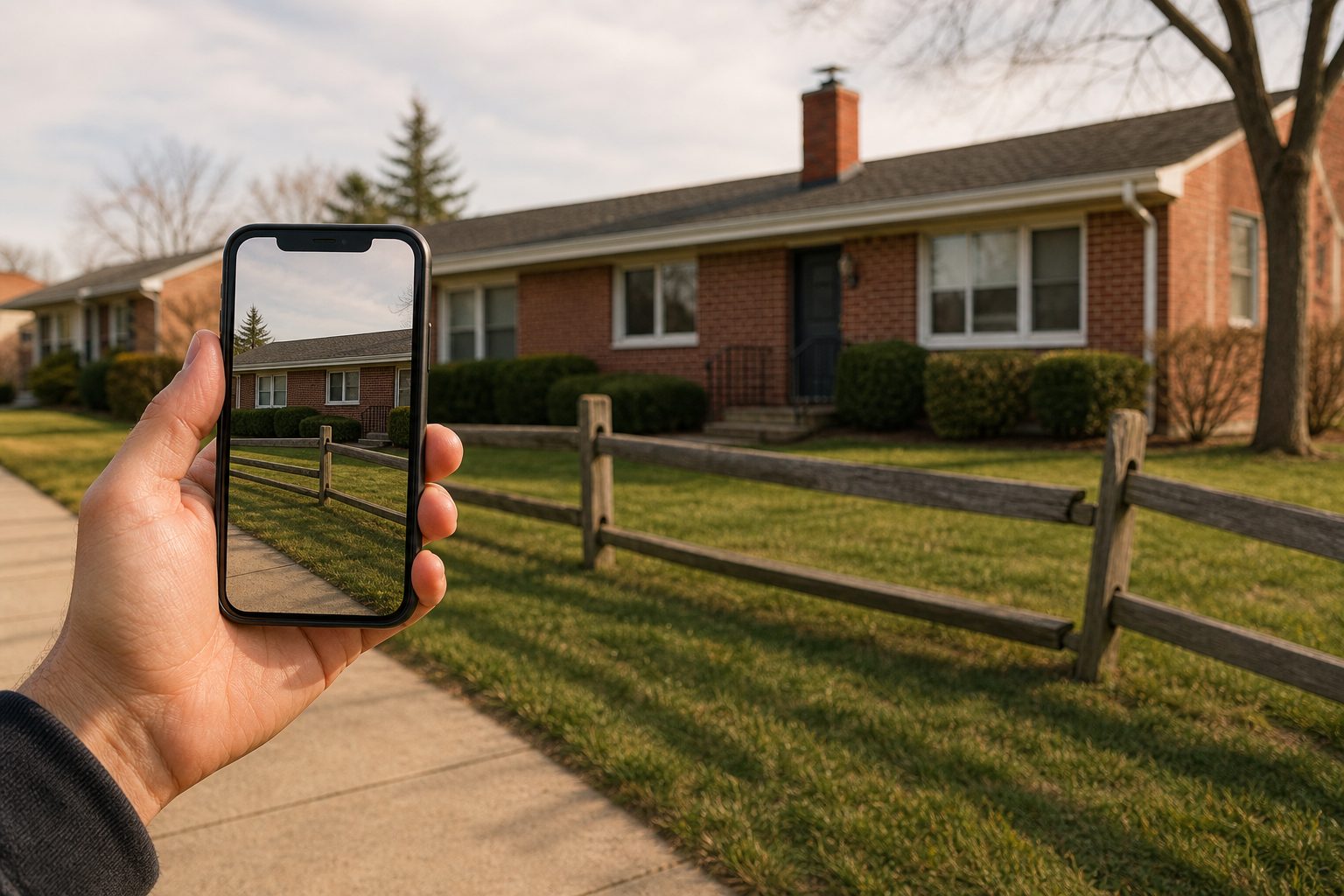
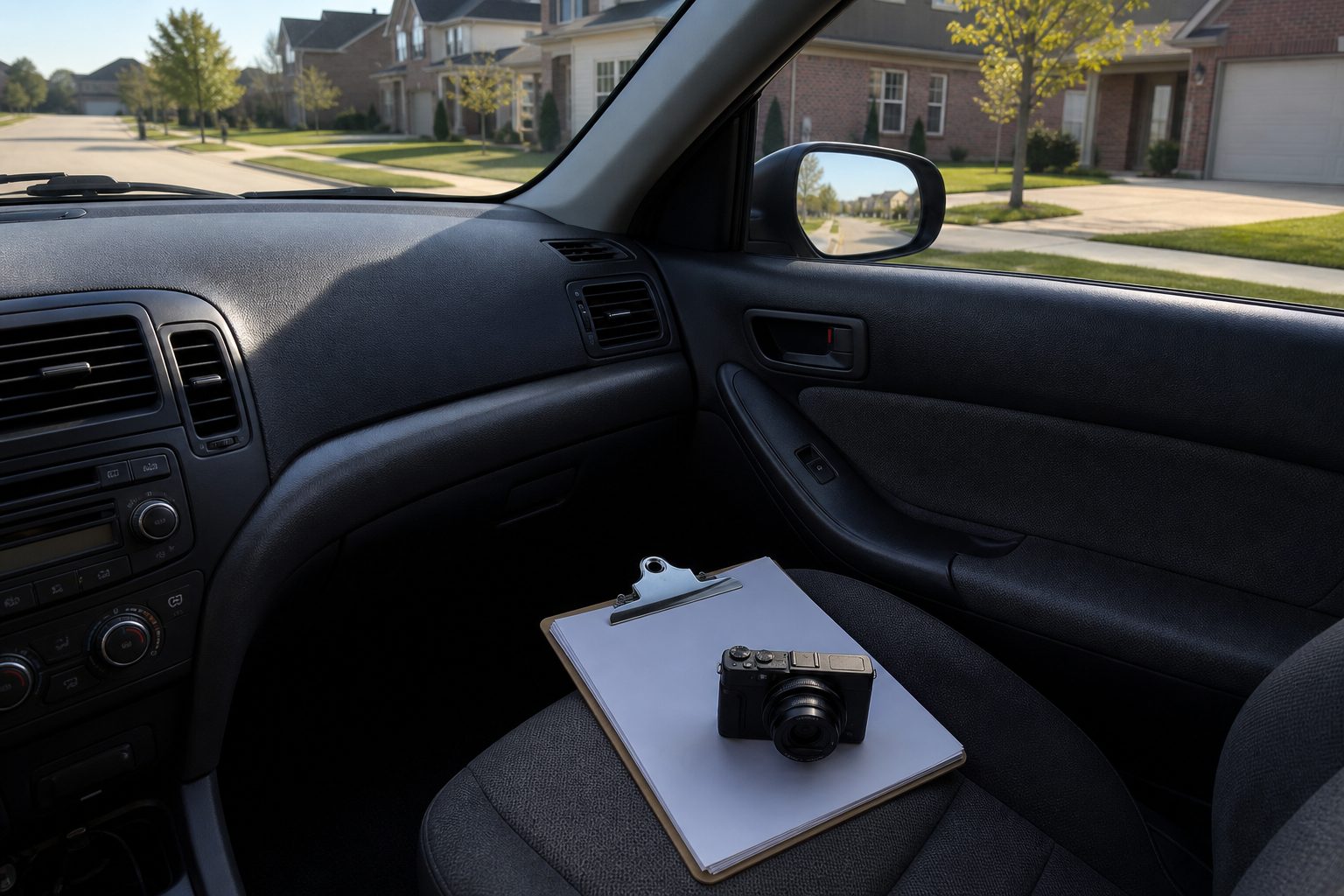
The real work of an inspection drive often falls to the passenger seat. As the driver moves slowly down the street, the passenger records addresses, jots quick notes, and snaps photos with a phone or tablet. The best teams develop a rhythm: the driver calls out "123 Ash, trash cans, two vehicles on lawn," while the passenger logs everything and takes a photo as evidence.
Photos matter. A clear image of a car on the lawn or a sagging fence supports any future notice letter. The photo serves as proof the violation was present at the date and time logged. This becomes important if a resident disputes the notice or claims selective enforcement. Most inspectors take an overview shot and a close-up if needed, but try to avoid capturing people or license plates unless unavoidable.
Address Verification
Accurate addresses are essential. Some communities have odd numbering or homes set back from the street, making it easy to log a violation to the wrong property. The passenger seat job includes double-checking the house number against a map or association roster. If numbers are missing or obscured, inspectors note this and may snap a photo of the mailbox or adjacent homes for context.
Quick Notation Systems
Short codes and checklists speed up the process. Many teams use a printed sheet or a mobile app with common violations pre-loaded. The passenger ticks boxes or types in brief notes, keeping the process moving. This avoids longhand descriptions in the moment and makes sorting the results easier back at the desk.
When the drive is done, the notes and photos together tell the story of the morning. Every logged issue is tied to an address and a timestamp, making the next steps, notice letters, tracking, and follow-up, much simpler.
See how HOACovenant handles this for community associations
Back at the Desk: Sorting the Morning Into Files
The real administrative work begins after the drive. The notes and photos collected in the field are sorted into open violation files for each property. Some managers use spreadsheets, others keep folders, paper or digital. The goal is to build a clear record for each address, with dates and photographic evidence arranged chronologically.
For new violations, the first step is to draft and send a notice letter. Most associations have a template, which is customized with the property address, date of inspection, and specific issue logged. The letter usually includes a photo and a deadline for correcting the problem, along with information on how to appeal or ask for an extension. The process is the same whether the issue is a trash can, lawn, or unauthorized construction.
Tracking Cures and Escalations
After the initial notice, the property is flagged for a follow-up drive. If the violation is corrected on the next inspection, the file is closed with a note and an updated photo. If not, a second or third notice is sent, sometimes with escalating language or penalties depending on the association's policies. Some managers keep a "hot list" of chronic violators for extra attention during each drive.
All this paperwork is critical if a violation ever escalates to a hearing or legal action. A file with dated photos, copies of letters, and notes from each drive helps the board show a pattern of fair and consistent enforcement. This protects the association in disputes and builds trust with residents who expect the rules to be applied evenly.
The most efficient managers rely on digital tools to store and retrieve these records. Mobile apps and web-based portals allow for uploading photos directly from the field, saving time and reducing the risk of lost paperwork. This also makes it easier to respond quickly to resident questions or board requests for status updates.
What a Regular Drive Prevents Later
Routine inspection drives may seem repetitive, but skipping them leads to bigger problems. When violations go unchecked, small issues become eyesores, one unmowed lawn turns into a row of neglected homes, and a single rusty car sets off a trend. Residents lose faith in the process if they see neighbors bending the rules without consequence. This leads to more complaints, strained meetings, and in extreme cases, falling property values.
Regular drives also defuse tension. When the rules are enforced consistently and transparently, most residents accept the occasional notice letter as part of community life. Open records and photographic evidence make appeals fair and straightforward. Board volunteers and managers spend less time in heated arguments, and more time on improvements that benefit everyone.
Technology now makes the inspection-to-notice process smoother. With a platform that logs violations, attaches photo evidence, and automates follow-up letters, the Saturday morning drive becomes less about paperwork and more about maintaining the community's standards. Tools like HOACovenant streamline the steps from the street to the file, so volunteers and managers can focus on the work that matters most.