Solar Access Statutes and What Architectural Review Still Controls
Nearly every state now has some form of solar access protection. These laws aim to prevent homeowners associations from outright banning rooftop solar panels. Instead, associations may only impose "reasonable restrictions" on placement, design, or installation. In practice, this means boards can require owners to submit plans for review, but outright rejection is usually not allowed if the main basis is appearance alone.
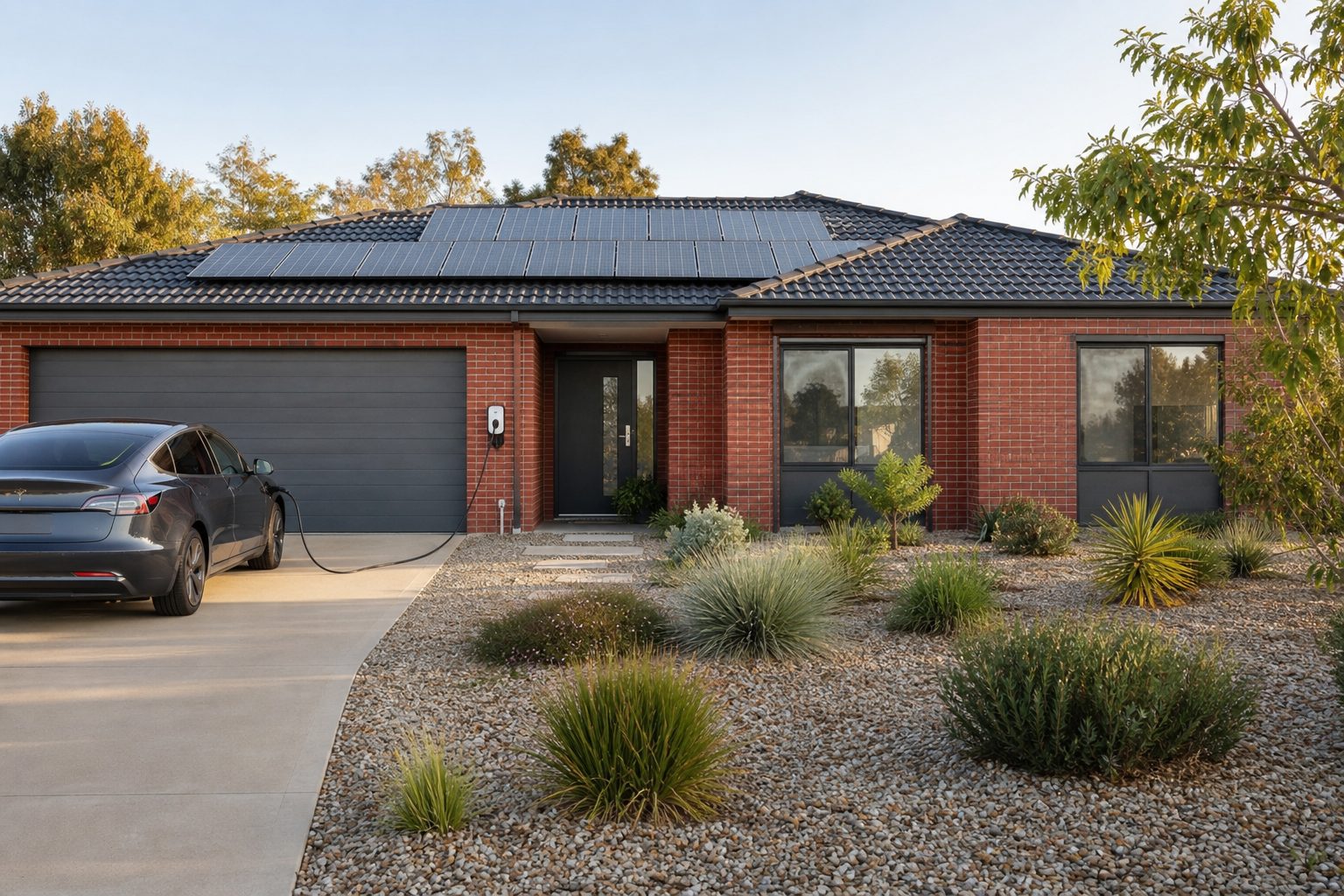
Architectural committees still have a say in how and where panels are installed. For example, some states allow HOAs to require panels to be placed in a specific location on the roof, as long as it does not significantly increase cost or decrease efficiency. Boards can ask for panels to be installed parallel to the roofline or to use a certain frame color, but cannot force a location that would cut the system's output in half or add thousands to the owner's bill.
Common area solar is another matter. Most statutes focus on individual lots or units. For shared roofs or open spaces, states rarely override the association's right to control installation, except where the association itself wants to pursue solar for the community's benefit.
Keep reading: Anatomy of a Fence Violation File, First Notice to Cure
Drought Landscaping, Native Plants and Artificial Turf Protections
Western and Sunbelt states have passed strong protections for water-saving landscaping. In many places, associations can no longer require 100% grass lawns or ban native and drought-tolerant plantings. Owners have a right to remove turf and install landscaping that reduces irrigation, as long as the plants or materials chosen are on an approved list or meet local guidelines.
Artificial turf is a newer battleground. Some states specifically prevent HOAs from banning it outright, provided the turf meets quality and appearance standards. Boards can set requirements for color, pile height, and drainage, but cannot require natural grass only. In these states, a homeowner who wants to swap grass for synthetic turf can do so by submitting a plan that matches published standards.
HOAs can still enforce basic maintenance, such as weed control, trimming, and replacement of dead or faded plants. The difference now is that the association cannot insist on high-water grass over a compliant low-water alternative. This gives owners more flexibility while keeping the neighborhood looking orderly.
EV Charger Rights in Garages, Driveways and Common Parking
Most new electric vehicle (EV) laws focus on "right to charge" provisions. These guarantee that owners can install charging equipment in exclusive-use areas like attached garages or deeded parking spaces. HOAs may require architectural review and proof that the installation is safe and code-compliant, but cannot deny a request that meets these criteria.
For shared parking lots or detached garages, state laws often require a "reasonable accommodation." This means boards must allow installation if it does not harm common property or unreasonably interfere with other residents' use. Owners may need to pay for upgrades, insurance, and restoration after removal. Associations may ask for proof of liability coverage and require that work be done by a licensed electrician.
Some associations have started to create community charging programs to avoid a piecemeal approach. This is allowed and often encouraged by state law, but individual owners still retain the right to install their own charger in their assigned space if they choose, as long as rules for safety and aesthetics are followed.
Keep reading: What a Two-Hour Community Inspection Drive Actually Covers
Flags, Political Signs and Religious Displays
Federal law protects the right to display the U.S. flag. Restrictions on flag size, location, and mounting are permitted, but outright bans are not. Most HOAs adopt guidelines for flagpoles, window mounts, and display hours. State laws often add protections for military and state flags as well.
Political signs are protected during election season in most states. Boards can regulate the size, number, and location of signs, but not prohibit them altogether. Common rules limit signs to one per candidate or issue, set size limits, and restrict display to a window or yard area. Timing rules may limit display to a period before and after an election, but must be applied evenly to all candidates and causes.
Religious displays, such as menorahs or crosses, have also gained protection in many states. Associations can adopt reasonable rules for time, place, and manner, but cannot ban displays that are consistent with these rules. This means holiday decorations or symbols in windows or on doors are usually allowed, as long as they do not cause safety hazards or block exits.
Short-Term Rental Limits and Grandfathering Fights
Short-term rentals (STRs), including Airbnb and VRBO, have been a major flashpoint. Some states now restrict a board's ability to impose new rental bans without a membership vote. Others require grandfathering, so existing STR owners keep their rights even if new restrictions are passed. This has led to disputes over how and when rental rules apply, especially for owners who bought under one set of rules and later faced a change.
Most state laws still allow associations to regulate the time, manner, and number of rentals. Common restrictions include minimum lease terms, maximum number of rentals per year, and guest registration. Enforcement gets tricky when local governments also impose their own restrictions or require permits. Boards must track both local and state law to avoid double penalties or lawsuits.
Grandfathering provisions are often tied to recorded rules or the date of purchase. This creates a paperwork challenge: the board must keep records of when rules changed, who was renting at the time, and whether proper notice was given. Disputes often arise over whether a unit was "actively" rented before a ban took effect, or whether a lapse in rentals voids grandfather status.
See how HOACovenant handles this for community associations
Accessory Dwelling Units and State Housing Preemption
Accessory dwelling units (ADUs) to sometimes called granny flats or in-law suites to are now protected by law in several states, most notably California. These laws often override association covenants that ban or restrict ADUs. Owners may add a second unit on their lot, provided it meets building codes and local zoning. Boards cannot require higher architectural standards or special approvals beyond what applies to the main house.
State housing preemption laws go further, limiting an HOA's ability to block or delay housing construction. Some states ban minimum lot sizes, cap parking requirements, or require associations to allow duplexes or other multi-unit developments in areas previously reserved for single-family use. Boards must be alert for new laws each session, as housing policy is a moving target in many states.
Enforcement remains a challenge. Associations still control common areas and can enforce noise, parking, and appearance rules that apply to all homes. But they cannot use these rules as a backdoor way to block ADUs or new housing types when state law specifically preempts local covenants.
Auditing Your Declaration and Rules Against Current Law
The pace of new state laws means that many associations have outdated CC&Rs, architectural guidelines, or rental rules on the books. Boards face real risk if they try to enforce a restriction that is now preempted by statute. Fines, legal fees, and bad publicity can result if a member sues or brings a complaint to state regulators.
An effective audit starts with a review of the governing documents: the declaration, bylaws, rules, and architectural standards. Compare each restriction to current state statutes and local ordinances. Focus on areas where the law has changed: solar installations, water-wise landscaping, EV charging, flag and sign displays, rentals, and ADUs. Where a rule is now overridden by law, update the policy and educate residents to avoid confusion and conflict.
Documenting violations and tracking cure periods is just as important as updating the rules themselves. Many boards now turn to digital tools for logging complaints, storing photo evidence, issuing escalating notices, and tracking compliance. These systems help ensure that enforcement stays both consistent and compliant with new legal requirements. HOACovenant is one such platform that supports this process for community associations looking to keep up with state law and modern compliance standards.